Saturday, November 19, 2011
A minor coup
The player's association and the owners unofficially agreed to a new collective bargaining agreement today. Besides the fact that we can revel in the fact that baseball got it done well before the NBA managed to get their shit together, there is an interesting tidbit in the change of the compensation process for free agents.
First of all, there are now caps on draft spending and international spending on free agents using a luxury tax for teams that overspend. In some ways, this seems like a penalty to the teams that do poorly; I doubt that agents of #1 prospects like Strasburg or Harper will be lowering their demands, so on top of a substantial payday, these teams could be paying into the commissioner's luxury tax pool.
More interestingly, the Elias rankings will be no longer used, starting in the 2012 offseason. Instead, teams will get compensation picks for players who depart in free agency if the team makes a qualifying offer of $12 million. This will greatly increase the value of good, but not great, free agents who would otherwise cost a draft pick to sign.
For this season, type A free agent relievers will no longer cost a draft pick to sign. However, the rule will not be applied retroactively. That means the Phillies will forfeit their first round draft pick to the Red Sox as compensation for Jon Papelbon, but if the Red Sox sign any other free agent closers like Ryan Madson or Heath Bell. By not having to give up a draft pick, I think the Red Sox are much more likely to sign a top reliever to help compensate for the loss of Paps. According to a Hardball Times study, draft picks in the 15-30 range typically produce an extra $6.5 million worth of value. That extra $6 million of value is nice to have (although it is hardly something you can count on - sometimes you get Mike Trout, sometimes you get Andrew Brackman), and the Red Sox have the Phillies' impatience to thank for that little windfall.

Thursday, November 17, 2011
The Curious Case of Francisco Cordero
The Red Sox have been linked with Francisco Cordero. Cordero has been a remarkably consistent closer since his elite 2007. He's saved 34 games every single game since 2007. His ERA has bounced around in those years, ranging from 2.16-3.84, but he's always held on to his closer job. What's even more attractive is that he just posted one of the best seasons of his career in 2010, with a sparkling 2.45 ERA and 37 saves.
However, if we dig a bit deeper, things look much more bleak for Cordero. Since his spectacular 2007 when he had a K/9 of over 12, his strikeout rate has declined every single year. Despite his 2.45 ERA in 2010, his K rate was easily the lowest of his career (5.43 K/9) and was well below average for a reliever, let alone a solid closer. He did lower his walk rate to the lowest it has been since 2007 (2.83 BB/9), but the strikeout rate screams that a disaster is looming. How exactly did he manage to avoid disaster in 2010? The lowered walk rate helped a lot, but the major contributor was his strand rate of 82%, well above league average of about 75%. Looking at his expected fielding independent pitching (xFIP), Cordero has had an expected ERA of around 4.00 for the last three years.
In doing research for this, I found that Yankees reliever Tyler Clippard had an insane 95.6% of his baserunners left on base. The worst with 60+ innings pitched? Tim Wakefield at 59%. Maybe he is worth another go around, as a bounceback in luckiness in runners stranded would make his ERA a lot more palatable.
But, if we dig even deeper, there are good signs for Cordero. Despite the massive drop in his strike out rate, Cordero's swinging strike rate actually increased between 2009 and 2010. Although it is well off his career high, his 10% swinging strike rate should lead to a K/9 of about 8.5, using the quick rule of thumb of swinging strike percentage - 1.5, which is very good. If he can maintain his 2.84 BB/9 rate and his 50% ground ball rate, that would have led to a FIP of about 3.5 for 2011. That isn't anything special, but it is solid.
All told, I'm not sure Cordero is a great fit for the Red Sox, despite his improved control and increased swinging strike rate in 2011. Given his saves totals over the last four years and his ERA in 2011, he'll probably benefit from the "proven closer" reputation. But, it is interesting to see how his statistics can be used to tell very different stories, as even the "Sabremetric" statistics point in different directions. I could have written three very different posts using statistics. Remember, as Mark Twain liked to say, there are lies, damned lies, and statistics.
However, if we dig a bit deeper, things look much more bleak for Cordero. Since his spectacular 2007 when he had a K/9 of over 12, his strikeout rate has declined every single year. Despite his 2.45 ERA in 2010, his K rate was easily the lowest of his career (5.43 K/9) and was well below average for a reliever, let alone a solid closer. He did lower his walk rate to the lowest it has been since 2007 (2.83 BB/9), but the strikeout rate screams that a disaster is looming. How exactly did he manage to avoid disaster in 2010? The lowered walk rate helped a lot, but the major contributor was his strand rate of 82%, well above league average of about 75%. Looking at his expected fielding independent pitching (xFIP), Cordero has had an expected ERA of around 4.00 for the last three years.
In doing research for this, I found that Yankees reliever Tyler Clippard had an insane 95.6% of his baserunners left on base. The worst with 60+ innings pitched? Tim Wakefield at 59%. Maybe he is worth another go around, as a bounceback in luckiness in runners stranded would make his ERA a lot more palatable.
But, if we dig even deeper, there are good signs for Cordero. Despite the massive drop in his strike out rate, Cordero's swinging strike rate actually increased between 2009 and 2010. Although it is well off his career high, his 10% swinging strike rate should lead to a K/9 of about 8.5, using the quick rule of thumb of swinging strike percentage - 1.5, which is very good. If he can maintain his 2.84 BB/9 rate and his 50% ground ball rate, that would have led to a FIP of about 3.5 for 2011. That isn't anything special, but it is solid.
All told, I'm not sure Cordero is a great fit for the Red Sox, despite his improved control and increased swinging strike rate in 2011. Given his saves totals over the last four years and his ERA in 2011, he'll probably benefit from the "proven closer" reputation. But, it is interesting to see how his statistics can be used to tell very different stories, as even the "Sabremetric" statistics point in different directions. I could have written three very different posts using statistics. Remember, as Mark Twain liked to say, there are lies, damned lies, and statistics.
Tuesday, November 15, 2011
A totally made up rumor
The Red Sox should sign Matt Murton. Why?
Matt Murton has decided to stay in Japan, so this question is irrelevant now. Still, Murton would have filled a valuable role for the Red Sox.
1. He is freely available. Murton is coming off an extremely nice season in Japan where he broke Ichiro's all time hits record, but didn't show a lot of power. He also hit for 200 hits in his first season in Japan, so it isn't a fluke. He can hit for a high average, draw a few walks, and hit for a little bit of pop (29 HR in 900 career at bats).
2. Murton is right handed, so he would be a nice complement to the all lefty outfield the Red Sox currently start.
3. Murton is an above average defender in the outfield, so he would likely be able to play in both right field and left field.
It isn't clear that Matt Murton would accept a bench role on a major league team when he could start (and star in Japan). It also isn't clear that a MLB offer would be more lucrative financially for him than a job in Japan would be. If neither of those things are an option, Murton could be an intriguing piece for any MLB team. Despite his failure to stick following the 2009 season, we are talking about a player with a perfectly league average OPS who plays good defense.
Matt Murton has decided to stay in Japan, so this question is irrelevant now. Still, Murton would have filled a valuable role for the Red Sox.
1. He is freely available. Murton is coming off an extremely nice season in Japan where he broke Ichiro's all time hits record, but didn't show a lot of power. He also hit for 200 hits in his first season in Japan, so it isn't a fluke. He can hit for a high average, draw a few walks, and hit for a little bit of pop (29 HR in 900 career at bats).
2. Murton is right handed, so he would be a nice complement to the all lefty outfield the Red Sox currently start.
3. Murton is an above average defender in the outfield, so he would likely be able to play in both right field and left field.
It isn't clear that Matt Murton would accept a bench role on a major league team when he could start (and star in Japan). It also isn't clear that a MLB offer would be more lucrative financially for him than a job in Japan would be. If neither of those things are an option, Murton could be an intriguing piece for any MLB team. Despite his failure to stick following the 2009 season, we are talking about a player with a perfectly league average OPS who plays good defense.
Taking a closer look at the Papelbon deal
The details of the Papelbon deal have been released, so we can take a closer look at it. Papelbon signed a four year, $50 million deal, with a $13 million vesting option (no buyout). The option vests if Papelbon finishes 55 games in 2015 or 100 in 2014-15. I would say the option has a good chance to vest - Papelbon has topped 55 games finished in two of the last four years, and has never had a two year stretch where he failed to finish 100. The Phils aren't afraid to stick with an ineffective closer, either. In 2009 Brad Lidge went 0-8 with a mind boggling 7.21 ERA, but still managed 31 saves and 55 games finished.
The average annual value of the deal without the option is $12.5 million, which is a record for anyone who isn't Mariano Rivera. The total value of the contract is a record high for a reliever, and will pay Papelbon through his age 34 or 35 season.
For the Phillies, I understand that they want to keep their championship window open as long as possible. With Roy Halladay, Chase Utley, Ryan Howard and Cliff Lee under contract and probably past their peak, the time to win another title may already be fading. While Papelbon may help them win in 2012 or 2013, the deal could add to the Phillies getting old in a hurry.
Ryan Howard is just beginning a five year, $125 million deal that will take him through his age 36 season. My feelings about the Howard extension are already on file, but short version is that given his age, size, the history associated with left handed sluggers, and the fact that he's already going to miss 2012, this contract looks like a disaster before it even officially begins.
Chase Utley is under contract for an additional two years ($12.5 million per), which will take him through his age 34 season. Utley has a serious knee injury that delayed the start of the 2012 season for him and one that will most likely bother him for the rest of his career. He hasn't topped 110 games in the last two years and put up career lows in batting average, slugging percentage, isolated power, and on base percentage.
Halladay is under contract for another two years ($20 million per) through his age 36 season.
Cliff Lee is under contract until 2015, with a $27.5 million option for 2016 that will most likely be picked up if he's at all effective, given the enormous $12.5 million buyout. At that point, Lee will be 37 years old. Both pitchers have continued to be effective and may live up to their ace status, but betting on pitchers in their mid to late thirties is a good way to go broke.
All told, that is $364 million committed to five players in their 30's over the next five years.
From the Red Sox perspective, the length of the contract is probably what sunk the deal. The $12.5 million salary isn't massive, given Papelbon earned $12 million last year. But to commit four or five years to a reliever is scary, ask the now fired JP Ricciardi about how his five year commitment to BJ Ryan worked out. It will be interesting to see how the Red Sox reallocate the money. They still need starters (more on that later), bullpen help, and maybe a right fielder or a DH, although I think they'll stand pat and resign Papi and stick with Reddick.
The average annual value of the deal without the option is $12.5 million, which is a record for anyone who isn't Mariano Rivera. The total value of the contract is a record high for a reliever, and will pay Papelbon through his age 34 or 35 season.
For the Phillies, I understand that they want to keep their championship window open as long as possible. With Roy Halladay, Chase Utley, Ryan Howard and Cliff Lee under contract and probably past their peak, the time to win another title may already be fading. While Papelbon may help them win in 2012 or 2013, the deal could add to the Phillies getting old in a hurry.
Ryan Howard is just beginning a five year, $125 million deal that will take him through his age 36 season. My feelings about the Howard extension are already on file, but short version is that given his age, size, the history associated with left handed sluggers, and the fact that he's already going to miss 2012, this contract looks like a disaster before it even officially begins.
Chase Utley is under contract for an additional two years ($12.5 million per), which will take him through his age 34 season. Utley has a serious knee injury that delayed the start of the 2012 season for him and one that will most likely bother him for the rest of his career. He hasn't topped 110 games in the last two years and put up career lows in batting average, slugging percentage, isolated power, and on base percentage.
Halladay is under contract for another two years ($20 million per) through his age 36 season.
Cliff Lee is under contract until 2015, with a $27.5 million option for 2016 that will most likely be picked up if he's at all effective, given the enormous $12.5 million buyout. At that point, Lee will be 37 years old. Both pitchers have continued to be effective and may live up to their ace status, but betting on pitchers in their mid to late thirties is a good way to go broke.
All told, that is $364 million committed to five players in their 30's over the next five years.
From the Red Sox perspective, the length of the contract is probably what sunk the deal. The $12.5 million salary isn't massive, given Papelbon earned $12 million last year. But to commit four or five years to a reliever is scary, ask the now fired JP Ricciardi about how his five year commitment to BJ Ryan worked out. It will be interesting to see how the Red Sox reallocate the money. They still need starters (more on that later), bullpen help, and maybe a right fielder or a DH, although I think they'll stand pat and resign Papi and stick with Reddick.
Tuesday, October 25, 2011
Theo's departure, in his own words
Theo wrote an Op/Ed for the Globe today, and it is definitely worth a read. He continues to be classy as he departs Boston. Perhaps the most interesting thing to me is that he had planned to leave after 2012, with Cherington taking over, even before the September collapse.
Sunday, October 23, 2011
Tackling Pete Abraham's To Do List for Cherington
Now that Theo has finally officially joined the Cubs, and left in style, folks are starting to write about what needs to get done in the Red Sox offseason. Because of limited financial flexibility and two massive commitments last offseason, making a splash in free agency really isn't an option.
1. Negotiate with Theo Epstein for compensation for Theo Epstein.
This one is truly bizarre. Theo will be trying to argue he isn't that valuable, while Cherington will try and upsell his former boss on his own value. In the end, it will get done, but the rumblings are that none of the Cubs three major prospects will be involved.
2. Hire a new manager and coaching staff.
Lost in the chaos of the Theo departure is the fact that the Red Sox may have to hire an entirely new coaching staff. Curt Young lasted a single season in Boston, before returning to Oakland. Francona's two World Series titles still couldn't reach players.
3. Decide on the team options on Marco Scutaro ($6 million) and Dan Wheeler ($3 million)
Marco Scutaro was a 3 win player in 2011, according to Fangraphs. That puts his value at $12.9 million, and he put up $9.6 million worth of WAR in 2010 as well. A $6 million option seems like a no brainer to me, especially with Lowrie being injury prone and Jose Iglesias not ready for big league pitching. Dan Wheeler at $3 looks like an easy pick up too. He put up 50 innings of OK, but not spectacular relief. He's a bit over paid, based on value from either Fangraphs or Baseball Reference, but on a one year deal, it isn't a bad gamble to take. Bullpen depth was an issue, so letting go of a successful bullpen arm doesn't seem like a good idea.
4. Find someplace — San Diego, San Francisco, the moon — to send John Lackey.
No easy solution here. Sadly, sending John Lackey to space would be cheaper than paying the rest of his contract. Space tourism runs $20 million, Lackey has $45.75 million remaining. Maybe Cherington can send him to space twice.
5. Determine to what degree the team will fight to retain in-house free agents Jonathan Papelbon, David Ortiz, J.D. Drew, Erik Bedard, Tim Wakefield and Jason Varitek.
J.D. Drew is as good as gone, at least in my mind. I think the time may have come to let go of Wakefield and Varitek. With Lavarnway looking like a major leaguer, there isn't the roster spot for Varitek. Also, if the failed clubhouse culture falls on anyone, it would be the captain. Wakefield may hang on for one more season, but it wouldn't surprise me to see them move on. The hard decisions will be Papelbon and Ortiz. A lot will depend on what kind of contract it takes for them to resign. I'd top out at a 2 year deal for Ortiz and 4 years for Papelbon, but I'd try with a three year deal first. Bedard won't make a big difference one way or another.
6. Determine to what extent the medical and conditioning staff needs to be overhauled given the injuries and issues of the last two seasons.
I'm not sure the medical staff needs to be overhauled. Aside from the issues with Ellsbury's ribs in 2010, I'm not sure any issue can tied to the medical staff.
7. Decide whether to tender contracts to arbitration-eligible players Alfredo Aceves, Matt Albers, Mike Aviles, Daniel Bard, Jacoby Ellsbury, Jed Lowrie, Rich Hill, Andrew Miller, Franklin Morales and Jarrod Saltalamacchia before the Dec. 12 deadline.
Most of these players are fairly easy. Aceves, Albers, Bard, Ellsbury, Lowrie, Morales, and Saltalamacchia are all clearly going to be tendered contracts. Aviles will likely still fit in with the team as a utility guy, given his ability to play all the infield positions except shortstop. Rich Hill is coming off Tommy John surgery, so he may be a non-tender candidate. Andrew Miller has probably shown enough to warrant a roster spot, but his price tag will be about $3 million, so it isn't a small commitment.
8. Mend some fences with Carl Crawford, who was shuffled around the lineup all season by Terry Francona then heard that John Henry never wanted him in the first place.
Shuffling Crawford around the lineup is understandable. Crawford wasn't producing, and Francona is trying to win baseball games. Hearing that John Henry never wanted him in the first place is just bad business. If you have over $100 million invested in something, anything, you don't bad mouth it one year into a seven year deal. Period. Especially people. Frankly, I was appalled when Henry said that. In all of the coverage of the collapse, Henry had remained ever so slightly above the melee until that point. Absolutely no good comes out of bad mouthing the Crawford signing: Henry looks like a second guesser just trying to save face and a player who is being paid like the face of a franchise gets smeared. When compared to how Theo left down (see link above), you have to wonder about the ownership's professionalism and ability to effectively run the club.
Ben Cherington, your next few weeks are outlined. You're welcome.
1. Negotiate with Theo Epstein for compensation for Theo Epstein.
This one is truly bizarre. Theo will be trying to argue he isn't that valuable, while Cherington will try and upsell his former boss on his own value. In the end, it will get done, but the rumblings are that none of the Cubs three major prospects will be involved.
2. Hire a new manager and coaching staff.
Lost in the chaos of the Theo departure is the fact that the Red Sox may have to hire an entirely new coaching staff. Curt Young lasted a single season in Boston, before returning to Oakland. Francona's two World Series titles still couldn't reach players.
3. Decide on the team options on Marco Scutaro ($6 million) and Dan Wheeler ($3 million)
Marco Scutaro was a 3 win player in 2011, according to Fangraphs. That puts his value at $12.9 million, and he put up $9.6 million worth of WAR in 2010 as well. A $6 million option seems like a no brainer to me, especially with Lowrie being injury prone and Jose Iglesias not ready for big league pitching. Dan Wheeler at $3 looks like an easy pick up too. He put up 50 innings of OK, but not spectacular relief. He's a bit over paid, based on value from either Fangraphs or Baseball Reference, but on a one year deal, it isn't a bad gamble to take. Bullpen depth was an issue, so letting go of a successful bullpen arm doesn't seem like a good idea.
4. Find someplace — San Diego, San Francisco, the moon — to send John Lackey.
No easy solution here. Sadly, sending John Lackey to space would be cheaper than paying the rest of his contract. Space tourism runs $20 million, Lackey has $45.75 million remaining. Maybe Cherington can send him to space twice.
5. Determine to what degree the team will fight to retain in-house free agents Jonathan Papelbon, David Ortiz, J.D. Drew, Erik Bedard, Tim Wakefield and Jason Varitek.
J.D. Drew is as good as gone, at least in my mind. I think the time may have come to let go of Wakefield and Varitek. With Lavarnway looking like a major leaguer, there isn't the roster spot for Varitek. Also, if the failed clubhouse culture falls on anyone, it would be the captain. Wakefield may hang on for one more season, but it wouldn't surprise me to see them move on. The hard decisions will be Papelbon and Ortiz. A lot will depend on what kind of contract it takes for them to resign. I'd top out at a 2 year deal for Ortiz and 4 years for Papelbon, but I'd try with a three year deal first. Bedard won't make a big difference one way or another.
6. Determine to what extent the medical and conditioning staff needs to be overhauled given the injuries and issues of the last two seasons.
I'm not sure the medical staff needs to be overhauled. Aside from the issues with Ellsbury's ribs in 2010, I'm not sure any issue can tied to the medical staff.
7. Decide whether to tender contracts to arbitration-eligible players Alfredo Aceves, Matt Albers, Mike Aviles, Daniel Bard, Jacoby Ellsbury, Jed Lowrie, Rich Hill, Andrew Miller, Franklin Morales and Jarrod Saltalamacchia before the Dec. 12 deadline.
Most of these players are fairly easy. Aceves, Albers, Bard, Ellsbury, Lowrie, Morales, and Saltalamacchia are all clearly going to be tendered contracts. Aviles will likely still fit in with the team as a utility guy, given his ability to play all the infield positions except shortstop. Rich Hill is coming off Tommy John surgery, so he may be a non-tender candidate. Andrew Miller has probably shown enough to warrant a roster spot, but his price tag will be about $3 million, so it isn't a small commitment.
8. Mend some fences with Carl Crawford, who was shuffled around the lineup all season by Terry Francona then heard that John Henry never wanted him in the first place.
Shuffling Crawford around the lineup is understandable. Crawford wasn't producing, and Francona is trying to win baseball games. Hearing that John Henry never wanted him in the first place is just bad business. If you have over $100 million invested in something, anything, you don't bad mouth it one year into a seven year deal. Period. Especially people. Frankly, I was appalled when Henry said that. In all of the coverage of the collapse, Henry had remained ever so slightly above the melee until that point. Absolutely no good comes out of bad mouthing the Crawford signing: Henry looks like a second guesser just trying to save face and a player who is being paid like the face of a franchise gets smeared. When compared to how Theo left down (see link above), you have to wonder about the ownership's professionalism and ability to effectively run the club.
Ben Cherington, your next few weeks are outlined. You're welcome.
Wednesday, October 12, 2011
Dissecting the Globe Hatchet Job
If you haven't read the Boston Globe's summary of the Red Sox 2011 collapse, go ahead and do it now. Now that Theo has taken the Cubs job, you can probably expect a similar piece on him in the next couple weeks. Lucchino is nothing, if not predictable. Once the dust settles I'll write something about the departures of Theo and Tito, but for now, let's dive in to the Globe article. As with any anonymous attack article, this one is filled with "weasel words". By couching their claims in qualifiers like "apparently" and "seemingly", anonymous sources, and second hand information, the writer never actually truly claims anything, instead implying it.
Accusation 1: Tito lost control of the clubhouse due to personal issues, including separation from his wife, a son and son in law serving in Afghanistan, and a prescription pill problem.
First off, none of these things are actually real evidence that Tito lost control of the clubhouse or even reasons why he did. Life is messy. Life can be really hard. And the people who play for and run the Boston Red Sox are people too. There are ups and downs, good times and bad. At no point in time did I feel like Francona wasn't doing his job the best he could. The players played extremely poorly, and their September record reflects it. Finally, I was shocked by the casual inclusion of a thinly veiled assertion that Francona has a prescription painkiller problem. Francona is a 52 year old man who shredded his knee during his playing days. If you're in chronic pain, you're going to be taking prescription painkillers. His dosage and prescriptions are between him and his physician. Quite frankly, I'm ashamed that the Globe went down this road.
After I wrote this, Buster Olney has weighed in with similar thoughts that I had. "We're still waiting for the firm link to be established between Terry Francona's use of medication and the Red Sox's performance in September, and if there is none, then it's personal information that really is nobody's business and shouldn't be in a newspaper. Because no matter how gracefully the words are couched or how much opportunity Francona is given to tell his side of the story, the overall impression a reader will take away -- from the choice to use the information on the meds -- is that there is a drug problem in play. Which is really awful."
Accusation 2: The Red Sox were not interested in putting in the effort to win a championship
The only specific evidence given comes from an event surrounding the weather rescheduling with Hurricane Irene looming. After being on the road for 14 of 17 games, a brutal stretch, even in professional baseball, the Red Sox were apparently not happy with management's plan of a Saturday doubleheader. As a gesture, $300 headphones and a party on John Henry's yacht were offered. Not going to a party on John Henry's yacht, when they're back home for a stretch for the first time in weeks is not evidence that the players weren't committed to winning. If anything, going for rest instead of a party is a GOOD sign. I've been on field crews for two weeks of long hours and physically demanding work. Towards the end of the two week stretch the project manager, who was not involved in the field work, wanted to add on more work and the result was a lot of grumbling and unhappy employees. Eventually the plan was scrapped, but I'm sure an anonymous source could have said nasty things about us after the fact. The timing of Hurricane Irene and the long road trip is not the front office's fault, but to me, they're the ones looking petty out of all this.
Accusation 3: The pitchers' disconnectedness from the rest of the team
This is one I find pretty damning. According to the Globe, starting pitchers Josh Beckett, John Lackey, Jon Lester, and occasionally Clay Buchholz would not watch games they did not start, instead they drank beer, played video games, and ate chicken and biscuits in the clubhouse. Beckett, in particular, is expected to be a leader. He's been on the team for six years, and should absolutely know better. Although baseball, more than any other sport, is a collection of individual performances, this shows a total lack of camaraderie. Sadly, player contracts are guaranteed, and managers' are not, so Tito takes the blame on this one.
Accusation 4: Wakefield's quest for 200 wins hurt the team
This one I just don't understand. How can a pitcher trying to win a game possibly hurt a team? It isn't like a hitter only trying to hit home runs or a base runner always trying to steal a base. As a starting pitcher, you can't possibly win a game while hurting your team. Granted, Wakefield struggled down the stretch, but that has happened in three of the last 4 years (6.65 ERA in September in 2008, 8.36 in 2009, 4.22 in 2010, and 5.25 in 2011). Wakefield is 45 now, and he just wears down as the season goes on. He hasn't posted a better ERA before the All Star break than after since 2003, although his splits were close in 2005, with a slight edge before the break. The simple answer is that the rash of Red Sox pitching injuries (Daisuke, Buchholz, Lester, Beckett, and Lackey all missed time) made Wakefield a nearly a full time starter, which, at this stage of his career, he obviously isn't cut out for.
Accusation 5: Lack of leadership
Leadership is impossible to quantify, but the Globe throws Adrian Gonzalez under the bus for making this statement: "We play too many night games on getaway days and get into places at 4 in the morning,’’ Gonzalez complained. “This has been my toughest season physically because of that." The Globe goes on to point out that the Red Sox only played 5 Sunday night games, showing malice or ignorance about the fact that more than just Sundays are "getaway games." Every time the Red Sox appeared on Wednesday night baseball on ESPN was one more night game on a getaway day. Granted, it would take slightly more effort to figure out how many night games they played on getaway days. The Red Sox played 13 games, a few more than the Pirates, for example, who played 9. Not a huge difference, but enough to add up over the course of a long season. I'll give the Globe a little credit, it took me at least 15 minutes and a little Excel knowledge to figure this out, so I understand if they can't be bothered. And we wonder why print media is dying. Ellsbury was also singled out as not having any friends in the clubhouse. WEEI has already straight up refuted this.
Accusation 6: Theo failed to beef up the bullpen
It is a bit of a throw away line in the article, but it really bothered me. The 2011 Red Sox bullpen put up a 3.67 ERA, 4th in the AL. The 2010 Red Sox bullpen put up a 4.24 ERA, 12th in the AL. While the big ticket reliever, Bobby Jenks, was a disaster, Theo struck gold with other relievers. Key contributors Matt Albers, Scott Atchison, Franklin Morales, and Dan Wheeler were all scrap heap signings or low budget free agent pick ups. The third most valuable arm in the bullpen, Alfredo Aceves, was also a spectacular scrap heap signing, snagged for nothing after he was non-tendered by the Yankees.
All told, the only part of the organization that wasn't butchered was the ownership. Larry Lucchino has his fingerprints all over this article and all the leaks.
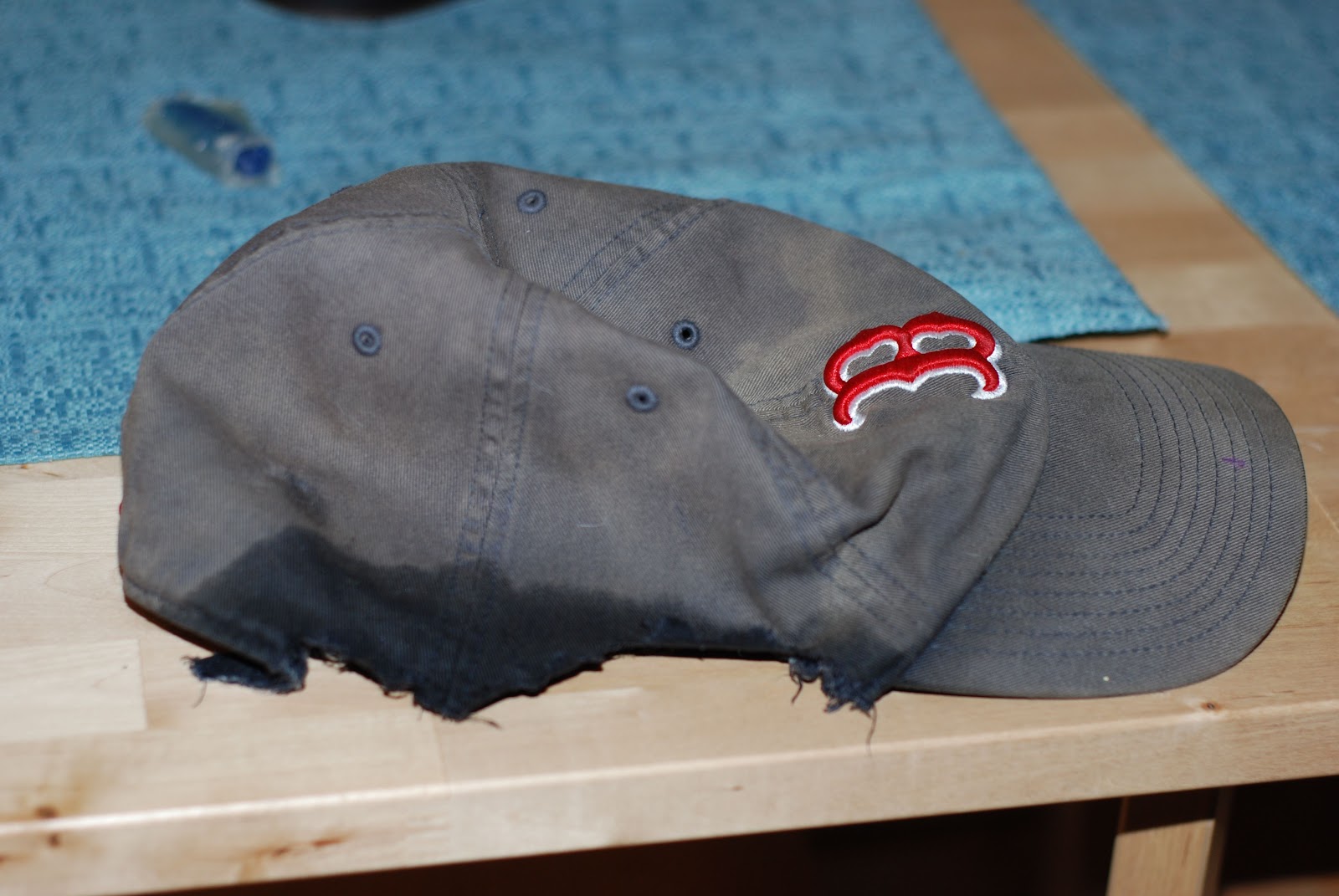
As I was writing this, Milly, my puppy, voiced her displeasure with the 2011 Boston Red Sox. I guess I'm in the market for a new hat, now. After the way the 2011 season ended, it's probably the safe move, anyway.

Accusation 1: Tito lost control of the clubhouse due to personal issues, including separation from his wife, a son and son in law serving in Afghanistan, and a prescription pill problem.
First off, none of these things are actually real evidence that Tito lost control of the clubhouse or even reasons why he did. Life is messy. Life can be really hard. And the people who play for and run the Boston Red Sox are people too. There are ups and downs, good times and bad. At no point in time did I feel like Francona wasn't doing his job the best he could. The players played extremely poorly, and their September record reflects it. Finally, I was shocked by the casual inclusion of a thinly veiled assertion that Francona has a prescription painkiller problem. Francona is a 52 year old man who shredded his knee during his playing days. If you're in chronic pain, you're going to be taking prescription painkillers. His dosage and prescriptions are between him and his physician. Quite frankly, I'm ashamed that the Globe went down this road.
After I wrote this, Buster Olney has weighed in with similar thoughts that I had. "We're still waiting for the firm link to be established between Terry Francona's use of medication and the Red Sox's performance in September, and if there is none, then it's personal information that really is nobody's business and shouldn't be in a newspaper. Because no matter how gracefully the words are couched or how much opportunity Francona is given to tell his side of the story, the overall impression a reader will take away -- from the choice to use the information on the meds -- is that there is a drug problem in play. Which is really awful."
Accusation 2: The Red Sox were not interested in putting in the effort to win a championship
The only specific evidence given comes from an event surrounding the weather rescheduling with Hurricane Irene looming. After being on the road for 14 of 17 games, a brutal stretch, even in professional baseball, the Red Sox were apparently not happy with management's plan of a Saturday doubleheader. As a gesture, $300 headphones and a party on John Henry's yacht were offered. Not going to a party on John Henry's yacht, when they're back home for a stretch for the first time in weeks is not evidence that the players weren't committed to winning. If anything, going for rest instead of a party is a GOOD sign. I've been on field crews for two weeks of long hours and physically demanding work. Towards the end of the two week stretch the project manager, who was not involved in the field work, wanted to add on more work and the result was a lot of grumbling and unhappy employees. Eventually the plan was scrapped, but I'm sure an anonymous source could have said nasty things about us after the fact. The timing of Hurricane Irene and the long road trip is not the front office's fault, but to me, they're the ones looking petty out of all this.
Accusation 3: The pitchers' disconnectedness from the rest of the team
This is one I find pretty damning. According to the Globe, starting pitchers Josh Beckett, John Lackey, Jon Lester, and occasionally Clay Buchholz would not watch games they did not start, instead they drank beer, played video games, and ate chicken and biscuits in the clubhouse. Beckett, in particular, is expected to be a leader. He's been on the team for six years, and should absolutely know better. Although baseball, more than any other sport, is a collection of individual performances, this shows a total lack of camaraderie. Sadly, player contracts are guaranteed, and managers' are not, so Tito takes the blame on this one.
Accusation 4: Wakefield's quest for 200 wins hurt the team
This one I just don't understand. How can a pitcher trying to win a game possibly hurt a team? It isn't like a hitter only trying to hit home runs or a base runner always trying to steal a base. As a starting pitcher, you can't possibly win a game while hurting your team. Granted, Wakefield struggled down the stretch, but that has happened in three of the last 4 years (6.65 ERA in September in 2008, 8.36 in 2009, 4.22 in 2010, and 5.25 in 2011). Wakefield is 45 now, and he just wears down as the season goes on. He hasn't posted a better ERA before the All Star break than after since 2003, although his splits were close in 2005, with a slight edge before the break. The simple answer is that the rash of Red Sox pitching injuries (Daisuke, Buchholz, Lester, Beckett, and Lackey all missed time) made Wakefield a nearly a full time starter, which, at this stage of his career, he obviously isn't cut out for.
Accusation 5: Lack of leadership
Leadership is impossible to quantify, but the Globe throws Adrian Gonzalez under the bus for making this statement: "We play too many night games on getaway days and get into places at 4 in the morning,’’ Gonzalez complained. “This has been my toughest season physically because of that." The Globe goes on to point out that the Red Sox only played 5 Sunday night games, showing malice or ignorance about the fact that more than just Sundays are "getaway games." Every time the Red Sox appeared on Wednesday night baseball on ESPN was one more night game on a getaway day. Granted, it would take slightly more effort to figure out how many night games they played on getaway days. The Red Sox played 13 games, a few more than the Pirates, for example, who played 9. Not a huge difference, but enough to add up over the course of a long season. I'll give the Globe a little credit, it took me at least 15 minutes and a little Excel knowledge to figure this out, so I understand if they can't be bothered. And we wonder why print media is dying. Ellsbury was also singled out as not having any friends in the clubhouse. WEEI has already straight up refuted this.
Accusation 6: Theo failed to beef up the bullpen
It is a bit of a throw away line in the article, but it really bothered me. The 2011 Red Sox bullpen put up a 3.67 ERA, 4th in the AL. The 2010 Red Sox bullpen put up a 4.24 ERA, 12th in the AL. While the big ticket reliever, Bobby Jenks, was a disaster, Theo struck gold with other relievers. Key contributors Matt Albers, Scott Atchison, Franklin Morales, and Dan Wheeler were all scrap heap signings or low budget free agent pick ups. The third most valuable arm in the bullpen, Alfredo Aceves, was also a spectacular scrap heap signing, snagged for nothing after he was non-tendered by the Yankees.
All told, the only part of the organization that wasn't butchered was the ownership. Larry Lucchino has his fingerprints all over this article and all the leaks.
As I was writing this, Milly, my puppy, voiced her displeasure with the 2011 Boston Red Sox. I guess I'm in the market for a new hat, now. After the way the 2011 season ended, it's probably the safe move, anyway.
Subscribe to:
Posts (Atom)